(204) 687-6169
Flin Flon & District Environment Council, Inc.
  • Home
  • Recycling
  • Landfill
  • News
  • About Us

Plastic Free July

12/7/2019

0 Comments

 
Originally published June 26/19 The Reminder. Flin Flon, Mb. Sponsored by North of 53 Consumers Coop

Banning single use plastic bags in North America began with Leaf Rapids, Manitoba in 2007. Many other places worldwide have followed including Thompson in 2010 and The Pas in 2016.

The concern has grown to include more single use plastics than just shopping bags.  Pictures of islands of plastic in the oceans and wild life tangled in plastic things have created support for a ban of single use plastics.  A recent Dalhousie University study indicated that 97% of Canadians are quite concerned.

There many reasons why single use plastics are used. They make sure food is safe and lasts longer. They are convenient for take-out. They also protect things and create packages for several pieces of the same thing.  

Another big reason plastic is used is because it is cheaper to use and lighter to ship.
And that is the rub. The same University of Dalhousie study indicated that people are only willing to pay a small amount to reduce single use plastics.

The Canadian government says it plans to ban some single use plastics beginning in 2021.

Why not now?

Because it is complicated.  Time is needed evaluate which items would have the biggest impact and to give industry time to find alternatives.

Some plastics are recyclable although there is significantly more recyclable plastic than current Canadian recycling mills can process.
​
A call for Plastic Free July started in Australia. Other places including the Green Action Centre in Winnipeg have promoted the idea.   Their challenge to us is to evaluate what kind of single-use plastics are in our lives, how we can move away from them and commit to making changes. Follow this link for more information. https://greenactioncentre.ca/module/plastic-free-july-at-green-action-centre/

0 Comments

Electronics Recycling

12/7/2019

1 Comment

 
Originally published June 19/19 The Reminder. Flin Flon, Mb. Sponsored by North of 53 Consumers Coop

A trailer of electronic waste for recycling was shipped May 8. The goal is to ship at least 10 metric tons or tonnes.  This load did not disappoint at 10.4 tonnes.

Electronics recycling is subsidized by the Electronic Products Recycling Association (EPRA). It is the Producer Responsible Organization (PRO) for the electronics industry that is required by the government to subsidize the recycling of their products sold in Manitoba.

Recyclable items include computers and attachments, televisions, video recorders, satellite boxes, home and auto sound systems, floor standing printers, telephones and personal audio or video items. Microwaves are the only kitchen appliance that is accepted.

Items can be left at the Centre any time. They should be dropped when the Centre is open if security is an issue as they are locked up at closing time. 

The items are stacked on pallets and wrapped for shipping. EPRA provides large bags for small items like cords, phones, keyboards and computer mice.

When we have 25 pallets the EPRA arranges for a semi –trailer to pick them up. They pay the shipping.

We are paid for the work of collecting items, preparing them for shipping and loading by the EPRA based on the weight of the load.  The amount paid  is $20.00 higher per tonne if the load is over 10 tonnes. We receive between $1,800.00 and $2,200.00 per load.

This program is funded by Environmental Handling fees paid when new items are purchased. 

The EPRA program requires that electronics recycling protects the environment and the health and safety of the workers. Local items are shipped to Exner  Ewaste in Elie, Mb.

More information is available at www.recycleMYelectronics.ca  or www.flinflonrecycling.org.
1 Comment

Recycling In the News

19/6/2019

0 Comments

 
Originally published June 5/19 The Reminder. Flin Flon, Mb. Sponsored by North of 53 Consumers Coop.

Recycling has been in the news in the past two weeks. The containers of ‘recyclables’ being returned from the Philippines and Malaysia are examples.

Friends have forwarded several news items to me. There are some interesting details in what I have read.

First of all, the problem plastics are usually film plastic like plastic bags, wrap and the number six plastics which includes Styrofoam. These are low grade plastic and rarely are recycled.

Many programs included them because they could ship them overseas. These countries have shut down the marked as they realized it is garbage and recycling programs that included these materials are stuck with them.  

The other problem is garbage contamination.

We have never recycled these products and remove garbage.  The companies we ship would not accept them because they did not ship overseas.  Therefore we are not facing backlogs thankfully.

The good news is that the high quality #1, 2 and 5 plastics are still moving to mills in North America. Their prices have fallen which affects us indirectly by an increase in the sorting cost in Winnipeg. 

China’s closure is still affecting the corrugated cardboard market which is 50% of the recyclables that we ship.

North American mills are at capacity so the Emterra and Cascades, the companies we ship to in Winnipeg are stockpiling it. Unfortunately, we have no space so must ship every two weeks.

The price had increased some over the past year. In May it dropped to from $35.00 to $14/tonne at Emterra.  Cascades, is paying nothing for our bales and charging $10.00/tonne for the larger bales from local stores.

I’m told it will probably get worse before it gets better. 
0 Comments

Community Pride

19/6/2019

0 Comments

 
Originally published May 29/19 The Reminder. Flin Flon, Mb. Sponsored by North of 53 Consumers Coop.

I was challenged once by a young person when I picked up some garbage. “Why? It’s not your garbage.”  “But it is my community.”

It is obvious recently that many people in our community feel this way.  Pictures and posts on Facebook tell the story of garbage cleaned up from streets, roadways and the bush.

Actually they tell two stories.

The first story is one of community pride and appreciation for everyone who is willing to give their time, energy and resources like vehicles to make it happen.

The second story is the problem of littering. Why do people litter? Where do they think it will go?

More garbage/recycling bins have been added to our community in recent years. If there are spots that tend to collect a lot of garbage, garbage and recycling bins could be place there.

But the lack of a garbage bin is no excuse.

 If no garbage or recycling bins are available, people should put it in a pocket; leave it in a vehicle or hold on to it until they find one.

There is absolutely no excuse for deliberately dumping large items in the bush. The local landfills are close by. If the $10.00 is too much, wait for spring clean-up.

Litter does not break down very quickly.
​
Here are some examples of how long it takes.
     Banana peels – 1 month
     Corn based plastic – 45 days
     Cigarette butts – up to 10 years
     Aluminium cans – 200 to 500 years
     Plastic bag – up to 1,000 years
     Styrofoam cup – 1 million years
 
Where should these items go?  Banana peels can be composted. Aluminium cans should be recycled. The rest go in the garbage. 
0 Comments

Honouring Bob Lyons

19/6/2019

0 Comments

 
Picture
Originally published May 15/19 The Reminder. Flin Flon, Mb. Sponsored by North of 53 Consumers Coop.

The community recycling program was started by a group of people who called themselves the Environment Committee. Members wanted to promote caring for the environment. Recycling was being done in many places and seemed like a good place to start.

As the program grew it needed money for space, shipping, equipment and employees. Some came from sale of recyclables but more was needed from municipalities and fundraising.

The Committee incorporated as Flin Flon & District Environment Council, Inc., a non-profit organization in 1995 to provide a legal framework for where the money was and how it was accounted for. It meant no one was personally profiting from recycling.

The activities of a non-profit organization are governed by a Board of Directors who volunteer to make decisions about operations of the recycling program. They may do the work or oversee people they hire to do the work and help out as they have time.

The knowledge and expertise of Board members make a big difference in an organization.

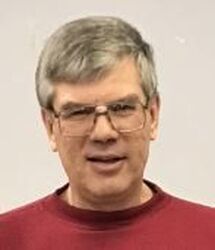
 Bob Lyons joined the Board of Directors in 2011. He brings a   variety of skills to the position.

 His official role is treasurer, overseeing financial transactions   and working with the budget committee.

 He has provided forklift operation training to staff and filled in   loading a trailer for shipping on one occasion. He does annual   maintenance on the forklift and has fixed wiring on the   recycling trailer. He is a great for consultant for mechanical repairs.
​

Bob worked closely with Frontier Industries preparing for and installing the new baler which was a three day process.

Bob regularly stops by the Centre regularly and helps with little maintenance jobs.
​

Thank you Bob for your valuable contributions. ​​

0 Comments

Honouring Mike and Ray

18/6/2019

0 Comments

 
Picture
Originally published May 8/19 The Reminder. Flin Flon, Mb. Sponsored by North of 53 Consumers Coop.

The Flin Flon & District Environment Council held its Annual General Meeting on Monday April 29.

The usual business of AGM’s like reviewing financial statements and electing Board members is not very exciting.
The first half of the meeting is designed to be interesting and informative by reviewing activities and honouring people who have played an important role at the Recycling Centre and the Flin Flon Landfill.

This year we recognized an employee, a volunteer and a Board member.
​
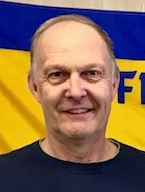
Mike Anderson began working Friday, Saturday and Sunday at the landfill in January of 2010. At the time he was the only employee there. Shelter was in a small cement shack heated by a small wood stove that burned wood recovered from the landfill.
Mike would meet people as they arrived and direct them to the places their loads would go.

The landfill operations have changed. A heated trailer and a gate attendant were added in July 2012. The attendant gives people directions for dumping their loads. Mike is responsible to make sure that happens and to help as needed.

The landfill has become more organized. The oil recovery program was in place when he started. Tires, household and construction areas became more organized and the Household Hazardous waste depot was added.
​
Mike collects beer cans for the Recycling Centre in his spare time while on the job.
​​

Picture
​Ray Berg has volunteered at the Recycling Centre eight days every month since 2013. He is a steady worker, getting recyclables ready for baling. As the volume of materials coming in has increased, his help is an important part of keeping up.
​
Ray enjoys sharing ideas, and talking about sports teams. 

​Thank you Mike and Ray.
0 Comments

Earth Day

3/5/2019

0 Comments

 
Originally published Apr 24/19 The Reminder. Flin Flon, Mb. Sponsored by North of 53 Consumers Coop.

Earth Day is celebrated in 192 countries to inspire action to protect the life support systems of the Earth.

The first Earth Day was celebrated in the US on April 22, 1970.

 At that time, untreated waste was dumped on the land, in the water or released into the air, whatever was most convenient.  Air pollution was accepted as the ‘smell of money’.

A few voices raised concerns about the damage to the environment but they were largely ignored.

This was also the time of social protest of the Vietnam War and social inequality.
Gaylord Nelson, a Democratic Senator was inspired to action after seeing the results of an oil spill in California. He decided to use the energy of the protesters to call for action on environmental damage.  

He persuaded Pete McCloskey, a conservation-minded Republican Congressman to join him for a day of public education and call to action. They hired Denis Hayes to promote the event. April 22 was chosen as it was between spring break and final exams for university students.

Earth Day 1970 is described as a rare working together of Republicans and Democrats and people from all walks of life: rich and poor, city slickers and farmers, tycoons and labor leaders.

By the end of 1970 the American government passed the Clean Air, Clean Water Act , the Endangered Species Act and established the Environmental Protection Agency.

“It was a gamble,” Gaylord recalled, “but it worked.”

Earth Day became a worldwide event in 1990. The focus has changed over the years. Recycling was important in the 1990’s. Climate change is the main concern since the early 2000’s.
​
Earth Day will be 50 years old in 2020.  

0 Comments

Nesting

3/5/2019

0 Comments

 
Originally published Apr 17/19 The Reminder. Flin Flon, Mb. Sponsored by North of 53 Consumers Coop.

I became familiar with the term nesting when training to become an Early Childhood Educator. Learning how to nest items is one of the basic skills young children learn.

An example of children’s nesting toys are boxes or barrels that come in graduated sizes so the small ones fit inside the bigger ones. The challenge is to get them in the right order so they all fit inside the biggest one.

Another good example is the Russian doll that opens to reveal several more dolls inside.

A grown-up example would be measuring cups or serving bowls that nest inside each other. They all stay together and take up less space in the cupboard. I am sure there are many more examples.

What does nesting have to do with recycling?

It actually causes problems.

We bale recyclables and ship them to Winnipeg where they are separated from a moving conveyor belt. The process of baling often forces one kind of material to nest inside another making it very difficult to separate them for recycling.

 It is hard to avoid but we do what we can to help out by making sure Items aren’t nested before we bale them. 

Often things arrive at the Centre nested. Some of the nested items we frequently see are cans inside tissue boxes, aluminum cans inside tin cans, plastics and jars inside cereal boxes.

Another problem we see is garbage nested inside of boxes.

Nesting the same materials is fine. An example is flattened boxboard boxes like cereal boxes, inside one boxboard box or smaller tin cans inside of larger one. 

Flattening boxes, large pop bottles and milk containers will save space in the recycling bag.
0 Comments

Loose

3/5/2019

0 Comments

 
​Originally published Apr 10/19 The Reminder. Flin Flon, Mb. Sponsored by North of 53 Consumers Coop.

Like every employer, safety for the public and my employees is a very important for me.

So it is concerning when I arrive at the Centre and there are a variety of materials including plastic bags, fliers or pieces of cardboard lying on the stairs. This creates significant chances of slipping and falling particularly if someone is carrying something and doesn’t see it.

I mentioned it to one of the team the other day. She commented she had cleaned it up less than 5 minutes ago.

It was a windy day. There were open boxes and loose materials on the dock that had blown onto the steps.

Loose materials at the Centre should be placed in the blue bins along the side of the trailer to avoid this problem.

Loose materials also create a big problem in the trailer parked between Walmart and Canadian Tire. The big doors are opened to empty it.  Loose items fall out creating a huge mess on the ground. Some inevitably blows around and must be picked up.

Some of this problem is created by people climbing in the trailer and breaking open bags. We assume they are looking to make some money from empty beer containers.

The other cause is open bags or boxes or materials being dumped loose into the trailer.  

It takes three or four people about 45 minutes to empty the trailer at the Centre. By comparison, the trailer from Denare Beach that picks up closed bags and boxes from homes and cardboard at the landfill takes about twenty minutes to unload with very little mess.
​
New signs have been placed on the trailer in an effort to reduce the problem.  

0 Comments

A Busy Month

3/5/2019

0 Comments

 
Originally published April 3/19 The Reminder. Flin Flon, Mb. Sponsored by North of 53 Consumers Coop.

April is always a busy month at the Recycling Centre.

The recyclables arriving at the Centre increases in the spring as many people bring all the bags they filled over the winter.

Other activities keep us busy.

Recycling and garbage bins are provided for the Flinty Fishing Derby. A few of our staff enjoy the event.

Two groups of children will tour the Centre this month. The children’s reactions and questions are always interesting. I usually learn something I can use for promoting recycling.

Two Annual General Meetings (AGMs) take place in April.

The Manitoba Association of Regional Recyclers (MARR) will meet in Brandon April 24. The usual business of reporting on the activities and financial status of the Organization and the election of Board members takes place in the morning. After a guest speaker at lunch, there will be a tour of the recycling and waste diversion operations at the Eastview Landfill.

I attend these meetings because I am a Board member. One or two of our Board members usually join me. The tours are a very interesting part of the day.

The AGM for the Flin Flon & District Environment Council, Inc. which runs the Recycling Centre will be Monday April 29, 2019 at 7:00 p.m. at Flin Flon City Council Chambers. There is a presentation and awards in the first half of the meeting. The business of reviewing financial statements and electing Board members takes place after the snack break.

Everyone is welcome to attend. Five dollar memberships are available at the meeting.

The Leisure Show at the Sportex is sandwiched in between these meetings. It’s always great opportunity to meet people and provide information about recycling. 
0 Comments

Hazardous Waste Update

3/4/2019

0 Comments

 
Originally published Mar 27/19 The Reminder. Flin Flon, Mb. Sponsored by North of 53 Consumers Coop.

Many products we use at home are hazardous. They have the danger symbols for explosive, flammable, poisonous or corrosive on their labels. They are a small part of our waste but have serious consequences in the environment.

For many years, hazardous waste was collected for safe disposal one afternoon in September at Centoba Park. It was not very convenient.

The Recycling Centre began accepting paint and compact fluorescent bulbs in March 2016. In July 2017 a full time collection depot for household hazardous waste (HHW) opened at the Flin Flon landfill.

Randy from Product Care, the industry organization that supports HHW safe disposal, trained landfill staff on correct sorting, storage and shipping for these materials. The large collection of hazardous waste that had accumulated at the landfill was cleaned up in the process.

Shipping hazardous materials requires correct labeling and a lot of paper work. Miller Environmental, the company who receives the material, provided forms that were mostly completed. We had to be sure to complete our part correctly when shipping with Gardewine.

This is changing. A truck from Miller Environmental arrived March 5 to collect the paint from the Recycling Centre and Home Hardware (which is also a collection site) and paint and barrels of hazardous materials from the landfill. They did all the paperwork. We just needed to sign off.

Miller plans to collect household hazardous materials twice a year in Flin Flon on a route that will include the other depots opening in the northern Manitoba.

Common household hazardous materials include all aerosol cans, small propane containers, flammable liquids including gasoline (must leave the container), pesticides and cleaning products.

​A complete list is available at www.reGeneration.ca. 

0 Comments

Last Week

3/4/2019

0 Comments

 
Originally published Mar 20/19 The Reminder. Flin Flon, Mb. Sponsored by North of 53 Consumers Coop.

Finding the topic for a weekly newspaper column is challenging. Regular readers may notice that some columns sound familiar. It is because a previous column has been reused.

Events during the week often provide the inspiration. That is the case this week.

A couple of people took advantage of the fact that I like questions to stop me for information they need about recycling. One gave me information.

The rule is that mixed materials are not recyclable. An example is the inside cardboard from the ‘Hello Fresh’ boxes which have a layer of aluminum or plastic. This person told me the layer is easily removed and wondered if the liner could then be recycled. The answer is yes.

A friend sent a couple of articles about the struggles in recycling worldwide.  It commented a lot of recyclables are ending up in landfills because of this which is unfortunate. It also mentioned that this is forcing North America and the rest of world to develop other recycling infrastructure.  An increase in our price for cardboard shows this is happening.

On a more serious note, I am worried for our world. Recycling does make a difference but so much more is challenging our planet.

Sunday when I was outdoors it was unusually quiet. There were no birds singing. It reminded me of information I read recently that the total mass of birds has decreased by 50% since 1970. Whether this is worldwide or North America only doesn’t matter. It is significant. Similar numbers are out there for insects and animals.

Habitat destruction, rising temperatures and unknown factors are contributing.
​
Change needs to happen fast. The question is how. The answers are not easy. 
0 Comments

Two Stops

3/4/2019

0 Comments

 
Originally published Mar 13/19 The Reminder. Flin Flon, Mb. Sponsored by North of 53 Consumers Coop.

As we understand the importance of dealing with waste responsibly it is also important to make it as convenient as possible.

I have toured several waste management sites in the province over the past few years while attending events sponsored by the Manitoba Association of Regional Recyclers. This organization’s activities provide information and networking about a wide variety of waste management issues.

The first place we toured was the RM of Rockwood’s transfer station. Garbage is placed in large bins for transport to a landfill.

That was the first stop of ten places located on a driveway that looped through the site where a variety of recyclable materials and other items that should not go into landfills could be dropped off.

This is an example of how many waste management sites are becoming a ‘one stop shop’ for responsibly getting rid of things we no longer want.

Our community manages these items at two places.

The first stop is your community landfill that collects metal, used motor oil and antifreeze and automotive batteries. Used tires are recycled from the Flin Flon landfill only. A collection depot for household hazardous waste and appliances that need refrigerant removed are also located there.

There is a trailer at the Flin Flon and Denare Beach landfills to collect cardboard and electronics.

The other stop is the Recycling Centre at 9 Timber Lane.

The main items processed at the Recycling Centre are cardboard, paper and multi material packaging items.

It also processes eligible electronics, household batteries, printer cartridges, books, paint and fluorescent tubes.
​
We love questions so call us at (204)687-6169 if you are unsure about where something goes. Information is also available at www.flinflonrecycling.org.

0 Comments

Not Recyclable

3/4/2019

0 Comments

 
Originally published Mar 6/19 The Reminder. Flin Flon, Mb. Sponsored by North of 53 Consumers Coop.

The corner booth at the Leisure show last year worked so well last year we are doing it again.

Recyclable items were on one side and non-recyclable items on the other.

The non-recyclable table was most popular as many of the people stopping by were recycling. I had to remind them it was there for information not to make them feel guilty for sending non-recyclable items to the Centre.
​
Here is a list of things we receive that are not recyclable:
  - plastic bags of any kind including those from dog food, even if they have a recycling symbol and a number.
   - Styrofoam.
  - mixed material items. These are items like cans made of cardboard and tin (i.e. many coffee cans or Pringles cans), padded envelopes, laminated paper. Juice boxes and windowed envelopes are the only exceptions.
  -  #6 plastic items. Common ones are single serve yogurt cups that are attached to each other, some clam shells usually for baked goods, Swiffer item containers. If there is an ‘S’ in the letters under the recycling symbol, it is a #6.
  -  dishes, mirrors, window glass. We only take bottles and jars.
  -  black #1 plastic. Most #1 plastic you can see through. Any #1 plastic items that are not see through cannot be sorted by machine at the mills.
  - kitchen appliances, vacuum cleaners. The only exception is microwaves.
  - Children’s toys, sports equipment.
  - cardboard fast food containers, disposable eating utensils and left over food.
  - Tin foil pans.
  - Liners from Good Food boxes, waxed, oily, painted or very dirty cardboard.
  - electric cords, Christmas lights, calculators.
  - Photographs, CDs, DVDs, electronic games.

Check out the pictures at www.flinflonrecycling.org.
0 Comments

Covering the Cost

3/4/2019

0 Comments

 
Originally published Feb 27/19 The Reminder. Flin Flon, Mb. Sponsored by North of 53 Consumers Coop.

It costs $17.00 to ship a bale. A bale of cardboard is worth about $15.00. Cardboard is 60% of a load.

It is obvious the money needed to process and ship recyclables is not covered by sale of materials. It comes from several sources.

In the beginning volunteers did the work. Selling materials paid the rent. Flin Flon contributed $6,500.00. A forklift was purchased with a grant.

Recycling subsidies became available when cans and plastics were added to the program.

In 1996 a one-time $65,000.00 grant from the City of Flin Flon was used to purchase a baler and other equipment needed for recycling to continue in our community.

Financial support from Flin Flon and Creighton increased only slightly over the next ten years while recycling grew by 60%.

The Centre purchased a building with a tenant and began managing the Flin Flon landfill in 2004. This revenue was needed to cover the increasing costs.

Prices for recyclables dropped or disappeared in the recession of 2007/2008. The two municipalities provided extra money both years to keep recycling afloat.

A per capita funding arrangement with was made with Flin Flon and Creighton following an overwhelmingly positive public meeting supporting recycling.  Denare Beach began contributing the per capita payments in 2017.

The Centre charges for pickup services to cover the cost.
​ 
In 2018, the revenue percentages were:  municipal recycling support - 27%, recycling subsidies - 21%, pick up services - 17%, rental Income - 15%, sale of recyclables including beer returns - 8.5%, Flin Flon landfill surplus - 9% and miscellaneous income like donations and the student grant - 2.5%.
 
Check out the Brief History of Recycling on our website, www.flinflonrecycling.org

0 Comments

Prices for Recyclables

3/4/2019

0 Comments

 
Originally published Feb 20/19 The Reminder. Flin Flon, Mb. Sponsored by North of 53 Consumers Coop.

I received a call from a community asking how much we pay for recyclables. I thought they were talking about paying back the deposit for beverage containers so I explained there is no deposit/return system in Manitoba except for beer cans and bottles.

That wasn’t what they were asking. They thought we paid for all recyclable materials we receive.  

I explained we cannot pay for materials as the money we receive for the materials we sell usually doesn’t cover the shipping costs. We also pay to have most of the materials sorted in Winnipeg.

The Flin Flon Recycling Centre is operated by a non-profit organization. The money needed to cover the costs of operations comes from a variety of sources including municipalities, rental income, subsidies and pickup fees.

Selling recyclables was only 8.5% of our revenue in 2018 and more than half of that came from returning empty beer containers. Prices for cardboard fell dramatically at the end of 2017 and made small increases in 2018.

In March, we began separating aluminum cans to sell to help offset the drop in cardboard prices and increased sorting costs.

Here are the numbers. Sorting costs increased in August from $45/tonne to $110.00. We found another company who only charged $65/tonne. 

Our aluminum prices is $700.00. Cardboard prices were between $15 and $45/tonne. 

It definitely takes a lot of aluminum cans to make a tonne so we compared prices per bale of material.

One bale of aluminum cans which averages about 125 kg is worth about $87.50. One bale of cardboard which averages 350 kg at $45./tonne is worth $15.00.

Prices are beginning to improve so more adjustments will come in 2019.
  
0 Comments

Looking Back at 2018

3/4/2019

0 Comments

 
Originally published Feb 13/19 The Reminder. Flin Flon, Mb. Sponsored by North of 53 Consumers Coop.

This past year brought several changes at the Recycling Centre.

We set a new record with 510 metric tons (tonnes) recycled. Corrugated cardboard increased by 50 tonnes. Commingled materials dropped by six and a half tonnes after significant increases in the three previous years. This is concerning as it may indicate fewer people are recycling at home.

The after Christmas mountain of materials at the beginning of 2018 almost crushed us. We got behind before Christmas because we closed for three days while our new baler was put in place. There wasn’t time to get it operational so we couldn’t use it to bale up the Christmas backlog.  

Illness and the death of one of our crew left us in shock and short staffed for most of January. Our forklift also had a break down which complicated things.

We were able to catch up by February. The new baler was operational on February 8.  It has been an essential addition to our operations as we could not keep up without it.

We purchased a trailer to collect cardboard and electronics at the landfill.  This makes it more convenient for contractors to recycle.

We began to separate, bale and sell aluminum cans in March as the price paid for corrugated cardboard had dropped dramatically at the end of 2017.

The cost of sorting materials increased dramatically in August so we changed to a processor where the increase was not as much.   

We shipped 26 semi-trailer loads of cardboard, commingled materials, office paper and aluminum cans last year. 

Thirty tonnes (three trailers) of electronics and 654 kg of batteries were recycled in 2018.
​
2018 was a challenging but very successful year. 

0 Comments

Easy Steps to Start Recycling

3/4/2019

0 Comments

 
Originally published Jan 23/19  The Reminder. Flin Flon, Mb. Sponsored by North of 53 Consumers Coop.

​It is very easy to make recycling a habit.
  1. Find out what is recyclable.
Check the website www.flinflonrecycling.org and the Flin Flon Recycling Facebook group page. There are pictures.  Information is available by email by request at (204)687-6169 or [email protected].
 
Recyclables are usually containers and paper products.
 
If you can tear a paper product it is recyclable. This includes fliers, catalogues, office paper, and boxboard.  The exceptions are gift wrap, tissue paper, coffee cups, construction paper and mixed material items like foil lined or padded envelopes and art projects.
 
Paper that is dirty, wet or has paint or oil on it is not recyclable.
 
Plastic containers with numbers except #3(PVC) or #6 (PS) can be recycled. The number is in the recycling symbol. Plastic beverage containers may not have a number but are recyclable.
 
Plastic bags and wrap are not recyclable.

  2.  Nothing should be drippy sticky or gooey. It is easy to drain empty liquid containers in the sink for a few minutes before adding to the recyclables.
 
Use a food scrapper to remove gooey stuff like sour cream or peanut butter then give it quick wash and drain. A net dish cloth works great.

   3.   Everything can go in the same bag or box. Shredded paper and household batteries should go in a separate closed bag or container before adding it to the collection.

  4.  Recyclables can be picked up at homes on Tuesdays in Denare Beach, Wednesdays in Flin Flon (with a red bag) or Thursdays and Fridays in Creighton. Or they can be dropped off at the Recycling Centre at 9 Timber Lane or in the trailer by Canadian Tire.

Call (204)687-6169 with any questions.
0 Comments

Details of a New Record

28/2/2019

0 Comments

 
Originally published Jan 16/19 The Reminder. Flin Flon, Mb. Sponsored by North of 53 Consumers Coop.

It is official. The total weight of materials recycled in 2018 is 510,361 kg or 510 metric tons or tonnes. This is a new record. The previous record was 500 set in 2007.

It is 47 tonnes more than 2017.

That is the big picture. It is always important to look at the details for a better picture.

The numbers for the different materials are:  Aluminum 2,767 kg, Commingled materials (sorted in Winnipeg) 153,193 kg, Corrugated cardboard 272,770 kg, Glass 45,846, Office paper including shred 37,045 and books and other items 6,452. (1,000 kg makes one tonne.)

The biggest increase was 50 tonnes in cardboard. This indicates that more businesses are recycling and some regulars like the Coop are recycling more.  The dumpster rates set by the City of Flin Flon increased last year which may have resulted in the increase.

Two items decreased.

Office paper was down just over a tonne.

The biggest surprise is the drop in commingled materials which includes the aluminum as it was included in previous years. This category is mostly the recyclables coming from homes. It was down by 6,497 kg or almost 6.5 tonnes.

This is a change as it increased 4,152 kg in 2016 and 7,714 in 2017.

Why? There could be several reasons.

The first thing that comes to mind is that fewer homes are recycling.

Other possibilities are people are consuming less so there is less packaging to recycle which would be a good thing. Or the percentage of plastics could have increased reducing the weight as they are lighter than fiber materials like fliers, magazines and boxboard.
​
The goal is to reverse this trend in 2019.
0 Comments

Records and Resources Part 2

28/2/2019

0 Comments

 
Originally published Jan 9/19 The Reminder. Flin Flon, Mb. Sponsored by North of 53 Consumers Coop.

The last column stated that a down turn in world recycling markets in 2018 will not result in another financial crisis for the local recycling program.

A better business plan, more support from municipalities and increased recycling subsidies moved the program from financial crisis to manageable. 

Increased recycling rates continued to be the Organization’s priority. Convenience is the key which is achieved mainly through curbside pickup.

In 2010, the Recycling Centre introduced the red bag curbside pickup program. Red was chosen as it is not a common colour for bags. The cost of the red bag covers the program’s expenses.  

Curbside pickup happens Wednesday mornings in Flin Flon only since Creighton began providing recycling pickup in 2014.

The City of Flin Flon purchased a trailer parked beside Canadian Tire in 2014 to provide more convenience for its citizens.

Finances were still very challenging until October 2013 when the decision was made to bale materials together and pay for sorting in Winnipeg. Finances and operations improved immensely.

A second baler with a conveyor feed was installed early in 2018. It bales only the materials sorted in Winnipeg. Without it, the Centre could not keep up with processing everything that comes in.

A new record of 510 tonnes was set in 2018.

The increase in tonnage, business pickups and tasks such as emptying the trailer requires more staff hours.  Sorting and shipping costs have increased and prices are lower for materials sold.   

All of this has resulted in the need for a modest increase in business pick up fees for the first time since 2014.
​
Municipal costs are also increasing slightly after remaining steady for the past 5 years. 
0 Comments
Forward>>
    Picture
    Author
    Deb Odegaard has been with the Flin Flon Community Recycling program since it began  in 1992.  She  became the Administrator in 2013.
    Deb writes a  column 'The Recycling Bin' in The Reminder, Flin Flon's newspaper. Past columns are posted here along with recycling stats  and anything else on her mind. 

    Categories

    All
    Brief History
    Events
    Recycling Bin 2020
    Recycling Bin 2021
    Recycling Statistics
    The Recycling Bin 2014
    The Recycling Bin 2015
    The Recycling Bin 2016
    The Recycling Bin 2017
    The Recycling Bin 2018
    The Recycling Bin 2019
    The Recycling Bin 2023

    Archives

    July 2026
    May 2026
    March 2026
    February 2026
    January 2026
    December 2025
    November 2025
    October 2025
    September 2025
    August 2025
    July 2025
    May 2025
    April 2025
    March 2025
    February 2025
    January 2025
    December 2024
    October 2024
    September 2024
    August 2024
    July 2024
    June 2024
    May 2024
    April 2024
    March 2024
    January 2024
    December 2023
    October 2023
    July 2023
    June 2023
    April 2023
    March 2023
    January 2023
    November 2022
    October 2022
    August 2022
    June 2022
    May 2022
    April 2022
    March 2022
    January 2022
    December 2021
    October 2021
    September 2021
    August 2021
    April 2021
    February 2021
    January 2021
    December 2020
    November 2020
    October 2020
    September 2020
    August 2020
    July 2020
    June 2020
    May 2020
    March 2020
    January 2020
    December 2019
    November 2019
    October 2019
    September 2019
    July 2019
    June 2019
    May 2019
    April 2019
    February 2019
    January 2019
    December 2018
    November 2018
    October 2018
    September 2018
    August 2018
    July 2018
    June 2018
    May 2018
    April 2018
    March 2018
    February 2018
    January 2018
    December 2017
    November 2017
    September 2017
    August 2017
    July 2017
    June 2017
    May 2017
    April 2017
    March 2017
    February 2017
    January 2017
    December 2016
    November 2016
    October 2016
    September 2016
    August 2016
    July 2016
    June 2016
    May 2016
    April 2016
    March 2016
    February 2016
    January 2016
    December 2015
    November 2015
    October 2015
    September 2015
    August 2015
    July 2015
    June 2015
    May 2015
    April 2015
    March 2015
    February 2015
    January 2015
    December 2014
    November 2014

    RSS Feed

​Flin Flon & District Environment Council, Inc